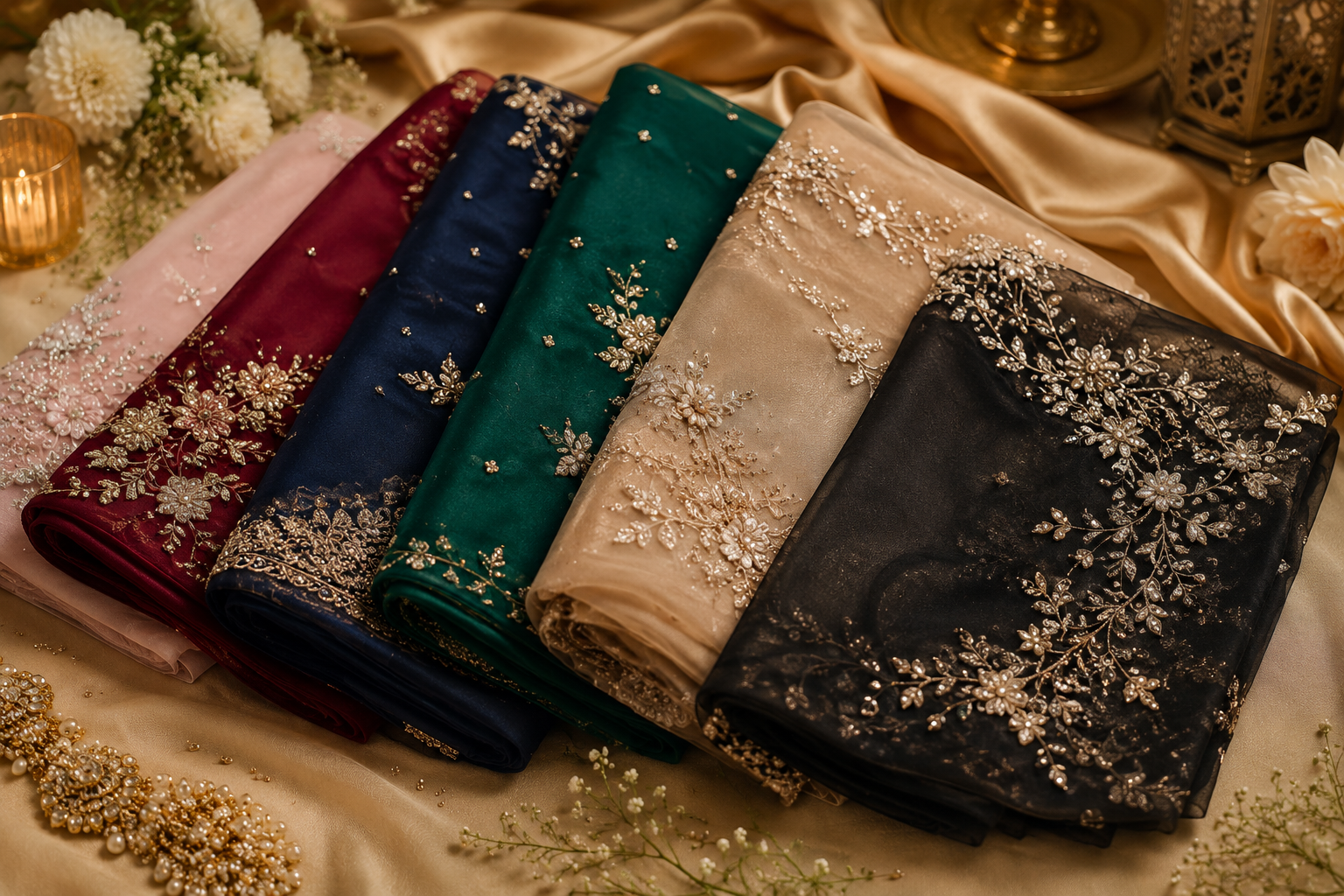

Buying designer wear should feel exciting, especially when you are choosing an outfit for a wedding, engagement, Eid celebration, reception, or another special occasion. But when the price moves into the premium range, one question becomes just as important as the design itself: Is this piece really authentic?
For shoppers looking for authentic designer wear in Bangladesh, this can be harder than it sounds. The market now includes original designer pieces, inspired outfits, replicas, master copies, and garments that sometimes look almost identical in photos. At first glance, the difference may seem small. Once you look closely at the fabric, embroidery, finishing, labels, and overall craftsmanship, the gap often becomes much clearer.
That matters because when you buy genuine designer clothing, you are paying for more than a beautiful look. You are also paying for the designer’s creative work, material selection, detailing, construction, craftsmanship, and brand value. A replica may copy the visual idea, but it may not deliver the same quality, finish, fit, or experience.
The good news is that you do not need to be a fashion expert to make a smarter purchase. You simply need to know what to check. In this guide, we will walk through the practical signs that can help you judge designer clothing authenticity, compare original pieces with copies, and make a more confident decision before you spend on premium designer clothing.
Why Designer Wear Authenticity Matters
When you buy premium designer clothing, you are not paying only for the name on the label. You are paying for the complete experience behind the outfit—the design, fabric, craftsmanship, finishing, fit, and the creative identity of the designer.
This is why luxury fashion authenticity matters so much. Two outfits may look similar in photos, but they can feel completely different when you see them in person or wear them. An original piece usually reflects the designer’s intended fabric, embroidery placement, colour balance, construction, and finishing. A replica may copy the overall appearance, but it often changes some of these details to reduce production costs.
The difference becomes even more important when you are shopping for a wedding, reception, engagement, or another occasion where the outfit plays a major role in your overall look. Poor finishing, uneven embroidery, weak fabric, or an inaccurate cut can affect how the garment falls on the body and how refined it looks in person.
Authenticity also helps you understand what you are actually paying for. If a seller presents an inspired or replicated outfit as genuine designer clothing, the customer cannot make an informed decision. A trustworthy purchase should always come with clear information about whether the piece is original, designer-authorized, inspired, or reproduced.
For buyers investing in premium designer clothing, authenticity is ultimately about confidence. You should know the origin of the outfit, understand its value, and feel assured that the quality matches the price you are paying.
Practical Authenticity Checklist
Before you pay for a designer outfit, take a few minutes to check the details below. A single sign may not prove authenticity, but several consistent signs can give you a much clearer picture.
-
Check the designer label: Look at the brand name, stitching, font, placement, size label, and care label. Poorly attached or inconsistent labels can be a warning sign.
-
Compare with official images: Match the embroidery, motifs, borders, sleeves, blouse design, dupatta, and overall construction with photos from the designer’s official website or social media.
-
Feel the fabric: Premium designer clothing should reflect the fabric quality described by the seller. Check the weight, texture, drape, transparency, and finish.
-
Inspect the embroidery closely: Look for neat spacing, secure embellishments, clean threadwork, and consistent detailing. Loose stones, uneven patterns, or rough finishing may indicate lower-quality production.
-
Check the inside finishing: Examine the seams, lining, hems, hooks, zippers, piping, and inner stitching. Genuine designer clothing usually receives careful attention beyond the visible surface.
-
Ask where the outfit came from: A reliable seller should be able to explain the product’s source and whether it is original, authorized, inspired, or replicated.
-
Look for original packaging and tags: Packaging alone does not prove authenticity, but correct tags, garment covers, boxes, or supporting documents can strengthen the overall verification.
-
Compare the price: If the price is dramatically lower than the known retail value, ask why. A discount can be genuine, but an unusually low price deserves closer inspection.
-
Check the seller’s reputation: Review the retailer’s physical presence, customer feedback, product descriptions, authenticity policy, and history of selling designer labels.
-
Ask to see the actual piece: For expensive purchases, request detailed photos, videos, or an in-person inspection instead of relying only on campaign images.
The key is to look at the full picture. Designer clothing authenticity usually becomes easier to judge when the product quality, sourcing, labels, pricing, and seller credibility all support the same claim.
Original, Replica, Inspired and Master Copy — Know the Difference
Before you judge whether an outfit is authentic, you first need to understand the language sellers use. Terms such as original, inspired, replica, and master copy may sound similar, but they describe very different types of products.
Knowing the difference helps you avoid paying an original-designer price for something that was never produced or authorized by the designer.
Original Designer Wear
An original designer outfit comes from the designer, fashion house, or an authorized retail channel. The piece follows the designer’s intended specifications, including the fabric, embroidery, colour, cut, detailing, and finishing.
With original designer clothes in Bangladesh, the key question is not simply whether the outfit carries a familiar label. The product itself, its sourcing, craftsmanship, and seller transparency should all support the claim that it is genuine.
Original pieces may also include brand tags, packaging, product codes, collection references, or other identifiers depending on the designer. However, these details should support authenticity rather than act as the only proof.
Designer-Inspired Clothing
An inspired outfit takes visual ideas from a designer collection but does not claim to be the original product. A local or independent manufacturer may recreate a similar colour palette, silhouette, embroidery style, or overall look using different fabrics and techniques.
There is nothing inherently wrong with inspired fashion when the seller describes it honestly. The problem begins when an inspired garment is presented as genuine designer clothing.
For buyers, transparency makes all the difference.
Replica or Master Copy
A replica attempts to reproduce an existing designer outfit more closely. Sellers may use terms such as master copy, first copy, premium copy, or same as original to describe these products.
The garment may look very similar in photos, but the manufacturer may use different fabric, embroidery methods, embellishments, lining, or construction to keep the price lower.
A well-made replica can still look attractive. But it remains a replica. It should not be sold as an original designer piece.
This distinction becomes especially important when comparing fake vs original designer wear in a premium market, where the price difference can be significant.
Counterfeit Designer Clothing
Counterfeit clothing goes one step further. It attempts to make a non-original product appear authentic by using copied labels, tags, packaging, logos, or other branding elements.
This is why you should never rely on a designer label alone. A copied label can look convincing, especially from a distance or in online photos.
Quick Comparison
|
Feature |
Original |
Inspired |
Replica / Master Copy |
|
Produced or authorized by designer |
Yes |
No |
No |
|
Follows original specifications |
Yes |
Partially |
Attempts to imitate |
|
Uses original designer branding |
Yes |
Should not |
May imitate |
|
Fabric and craftsmanship |
Designer-specified |
Varies |
Varies |
|
Price level |
Premium |
Usually moderate |
Usually lower |
|
Authentic designer product |
Yes |
No |
No |
10 Ways to Identify Authentic Designer Wear Before Buying
Authenticity is rarely proven by one detail alone. A label can be copied. Packaging can be recreated. Even product photos can be taken from a designer’s official campaign.
That is why you should look at the complete picture before buying authentic designer wear in Bangladesh. Start with the designer, then check the garment, the seller, the sourcing, and the price.
Here are 10 practical ways to do it.
1. Research the Designer and Collection First
Before you inspect the outfit, learn what the original piece should actually look like.
Visit the designer’s official website or verified social media pages. Search for the same collection, campaign, product name, or season. Pay attention to the silhouette, embroidery placement, border, sleeves, dupatta, blouse design, colour combination, and overall styling.
This gives you a reliable reference point.
For example, retailers such as The Mahal organise products around named designers and maintain a dedicated designer directory on their website. That makes it easier for shoppers to connect a garment with the designer or fashion label behind it.
If you cannot find any connection between the product and the claimed designer, ask the seller for more information before you buy.
2. Compare the Outfit With Official Product Images
Do not compare only the overall look. Zoom in.
Copies often reproduce the main design well enough to look convincing from a distance. The differences usually appear in the finer details.
Check:
-
Embroidery placement
-
Motif shape and spacing
-
Border width
-
Sleeve design
-
Neckline finishing
-
Lehenga panels
-
Dupatta edging
-
Blouse construction
-
Colour tone
-
Embellishment density
If the official piece uses a particular floral motif in a fixed position but the garment you are viewing has different spacing or placement, that deserves a closer look.
Small differences do not always mean a product is fake, especially if alterations or collection variations exist. But major inconsistencies should prompt questions.
3. Inspect the Designer Label Carefully
A genuine label should look like it belongs to the garment, not like someone added it later.
Check the font, stitching, positioning, spelling, material, and finish. Also look at the care label, size information, wash instructions, and any secondary brand tags.
But remember one important rule:
A designer label alone does not prove authenticity.
Counterfeit garments can carry copied labels too. Treat the label as one piece of evidence and compare it with the rest of the garment.
This matters even more when shopping for designer labels in Bangladesh, where buyers may encounter original pieces, imported collections, inspired products, and replicas in the same broader market.
4. Examine the Fabric Quality
Fabric tells you a lot.
Original designer pieces often rely on carefully selected materials because the fabric affects the drape, movement, colour, embroidery, and final appearance of the garment.
Depending on the design, you may come across silk, organza, velvet, chiffon, georgette, raw silk, tissue, premium net, or Banarasi-inspired fabrics.
Do not judge fabric only by touch. Look at how it falls, how it reflects light, how much structure it has, and whether it matches the designer’s original description.
A replica may use a similar-looking fabric but change the weight, weave, softness, or finish to reduce cost.
For luxury buyers, that difference becomes obvious once the outfit is worn.
5. Look Closely at the Embroidery and Handwork
This is where quality often reveals itself.
Designer garments may feature detailed techniques such as zardozi, resham work, sequins, beadwork, stones, crystals, cutdana, thread embroidery, or other decorative elements.
Look for consistency.
High-quality work should feel deliberate. Motifs should align properly. Embellishments should sit securely. Threadwork should look clean. The design should not feel crowded in one area and empty in another unless the original concept calls for it.
Turn the garment slightly and inspect how the work responds to light. Then look at the back of the embroidery if possible.
The front may look beautiful while the inside tells a very different story.
6. Check the Stitching and Inner Finishing
Many shoppers inspect only what others can see.
Do the opposite.
Look inside the garment.
Check the seams, lining, hems, zippers, hooks, piping, closures, reinforced sections, and the finishing around embroidered areas.
A premium piece should usually show attention to construction as well as appearance.
This does not mean every stitch must look handmade or flawless. Different designers use different construction techniques. The key is consistency and care.
When you pay for premium designer clothing, the garment should feel considered from the inside out.
7. Question Prices That Look Too Good to Be True
Everyone loves a good price. But designer wear needs context.
If an outfit normally sells at a premium level and someone offers what appears to be the same piece at a fraction of that price, ask why.
It may be:
-
An older collection
-
A legitimate sale
-
A sample piece
-
Pre-owned stock
-
A replica
-
A master copy
-
An inspired version
The price alone does not prove anything, but a large unexplained gap should make you investigate further.
Be especially careful with phrases such as first copy, same as original, designer quality, export original, or master copy.
These terms may describe the quality of a reproduction. They do not automatically mean the garment is authentic.
8. Ask the Seller Where the Outfit Came From
A trustworthy seller should be able to explain the product clearly.
Ask questions such as:
-
Who is the designer?
-
Which collection is the piece from?
-
Where was it sourced?
-
Is it original or inspired?
-
Does it come with original tags?
-
Is the garment altered?
-
Is original packaging available?
-
Can the seller explain the authenticity or sourcing process?
You do not need an interrogation. A few clear questions can tell you a lot about how transparent the seller is.
The Mahal, for example, presents itself as a retailer of curated South Asian designer collections and publicly lists designers carried through its platform and stores in Dhaka and Sydney. That kind of designer visibility gives shoppers more information to work with when verifying a purchase.
9. Check the Retailer’s Reputation
Sometimes the seller tells you as much as the garment.
Look at how long the retailer has operated, whether it has a physical presence, how clearly it names designers, how it describes products, and how it handles customer questions.
Also check:
-
Customer reviews
-
Return or exchange policies
-
Contact information
-
Product photography
-
Order confirmation process
-
Delivery information
-
After-sales assistance
The Mahal, for instance, publicly lists flagship locations in Dhaka and Sydney alongside its e-commerce operation and designer catalogue. These kinds of visible business details can help buyers perform basic due diligence before making a high-value purchase.
A strong reputation does not replace product verification, but it reduces uncertainty.
10. Ask to See the Actual Outfit
For an expensive purchase, do not rely only on campaign photography.
Ask for clear images or videos of the actual garment.
Request close-ups of:
-
The label
-
Embroidery
-
Border
-
Sleeves
-
Dupatta
-
Blouse
-
Fabric texture
-
Back of the garment
-
Inner stitching
-
Tags and packaging
If possible, inspect high-value bridal or occasion wear in person.
This is particularly useful when buying an original designer saree, original designer lehenga, or heavily embellished couture piece. These garments contain many details that ordinary website images may not show clearly.
The goal is simple: make sure the piece in front of you matches the story being told about it.
How to Identify an Original Designer Saree
A designer saree can look simple at first glance, but the details often reveal whether it is truly original. Fabric quality, border construction, embroidery, finishing, blouse detailing, and designer identification all work together to tell the story.
If you are buying an original designer saree, do not judge it only by the front-facing product photo. Look at the saree as a complete piece.
Start With the Fabric
Fabric is one of the strongest indicators of quality.
An original designer saree should feel consistent with the material described by the designer or retailer. Silk, organza, tissue, chiffon, georgette, velvet, and woven fabrics all behave differently in terms of weight, softness, shine, and drape.
Pay attention to how the saree falls when held or worn. A lower-quality copy may imitate the colour and surface design but still feel too stiff, too light, too shiny, or too synthetic compared with the original version.
Check the Border and Pallu
The border and pallu often carry some of the most recognisable design elements.
Look closely at:
-
Motif placement
-
Border width
-
Embroidery density
-
Threadwork
-
Embellishment pattern
-
Colour consistency
-
Pallu finishing
If you have access to official product images, compare these areas carefully. Replicas often get the overall design right but miss smaller details in the border or pallu.
Inspect the Embroidery
Designer sarees often depend on precise embroidery to create their premium look.
Check whether the motifs appear balanced and evenly placed. Look for secure beads, stones, sequins, zari, or threadwork. Loose embellishments, uneven stitching, rough edges, or inconsistent patterns can indicate lower-quality production.
Also inspect the reverse side if possible. Clean finishing on the inside can tell you a lot about the standard of work.
Look at the Blouse Piece or Blouse Design
Many designer sarees come with a matching blouse piece or a blouse designed specifically for the saree.
Compare:
-
Fabric
-
Colour
-
Embroidery
-
Sleeve detailing
-
Neckline style
-
Border elements
If the blouse looks completely different from the official reference without any clear reason, ask the seller for clarification.
Check the Designer Label and Tags
Look for the designer label, care label, size information if applicable, and any original tags or packaging.
These details can support authenticity, but they should never be your only proof.
A label can be copied. That is why you should combine label inspection with fabric quality, embroidery, sourcing, and seller credibility.
Compare the Saree With the Official Collection
This is one of the most useful steps.
Search for the designer’s official campaign images, website listing, social media post, or collection release. Compare the exact saree rather than only the designer name.
Check whether the colour, motifs, border, blouse, pallu, and embellishments all match.
Small differences may happen due to lighting, production variation, or alteration. Large differences need explanation.
Ask About the Source
If you are buying from a retailer in Bangladesh, ask where the saree came from and whether it is an original designer piece, an inspired design, or a replica.
A reliable seller should explain this clearly.
For a luxury purchase, transparency matters just as much as appearance. The goal is not only to find a beautiful saree. It is to know exactly what you are paying for.
Final Check Before You Buy
Before making the payment, ask yourself:
-
Does the fabric match the designer description?
-
Does the border match official images?
-
Is the embroidery clean and consistent?
-
Does the blouse piece align with the original design?
-
Are the tags and labels present and credible?
-
Can the seller explain the source clearly?
If several of these details line up, you can shop with much more confidence.
An original designer saree should feel convincing at every level: design, fabric, finishing, craftsmanship, and sourcing.
How to Identify an Original Designer Lehenga
A designer lehenga usually carries more construction detail than many other outfits, which gives you more points to inspect before buying. The lehenga skirt, blouse, dupatta, lining, embroidery, panel structure, and finishing should all work together as one complete design.
If you are looking for an original designer lehenga, start by comparing the actual garment with the designer’s official collection images. Then move closer and inspect the craftsmanship.
Check the Lehenga Panels and Overall Construction
A well-made designer lehenga should have balanced panel placement and a clean overall shape.
Look at how the panels join together. The embroidery, motifs, and borders should align naturally rather than appear interrupted or uneven.
Also check how the lehenga falls when worn. The construction should support the intended silhouette, whether the design is structured, flowing, voluminous, or fitted through the waist.
Compare the Embroidery With the Original Design
Heavy designer lehengas often use embroidery as a major part of the visual identity.
Inspect:
-
Motif placement
-
Embroidery density
-
Sequin work
-
Zardozi
-
Beadwork
-
Threadwork
-
Stone or crystal detailing
-
Border finishing
A replica may copy the main motif but simplify the smaller details. You may notice fewer embellishments, different spacing, lighter embroidery, or a border that does not match the official design.
These differences may seem small in photos, but they can change the overall look significantly in person.
Inspect the Blouse Carefully
The blouse deserves just as much attention as the skirt.
Compare the neckline, sleeve design, embroidery, back detailing, closures, and fabric with the official product images. On many designer lehengas, the blouse carries signature details that complete the full look.
If the blouse feels generic while the lehenga looks highly detailed, ask whether the set has been altered, customized, or mixed with a different piece.
Look Closely at the Dupatta
The dupatta can reveal quality very quickly.
Check the border, embroidery, edging, fabric, embellishments, and overall finishing. Some designer lehengas use lightweight dupattas with delicate borders, while others feature heavier embroidery or statement detailing.
Compare the dupatta with the original collection images. A copied outfit may focus heavily on the lehenga itself but simplify the dupatta to reduce production cost.
Check the Lining and Cancan
Do not stop at what you can see from the outside.
Inspect the lining, inner seams, waistband, hooks, zip, and any cancan used to create volume.
The cancan should feel properly attached and balanced. Poorly placed or overly stiff cancan can affect how the lehenga moves and sits on the body.
The lining should also feel comfortable against the skin and suit the weight of the outer fabric.
Examine the Weight and Balance
A heavily embellished lehenga may naturally feel substantial, but weight alone does not prove quality.
The garment should feel balanced.
If most of the weight sits unevenly in one area, or if the blouse and dupatta feel noticeably cheaper than the skirt, look more carefully at the full set.
An original designer piece should feel thoughtfully constructed rather than simply heavy.
Verify the Designer Label and Product Details
Check the label, care instructions, tags, and packaging where available.
Then compare those details with the designer’s official presentation.
If the retailer provides the designer name, collection name, product code, or style reference, use those details to verify the outfit more confidently.
Again, the label helps, but it should support the overall evidence rather than replace it.
Ask Whether the Lehenga Has Been Altered
This matters more than many buyers realize.
A genuine designer lehenga may still look different from official photos if someone has altered the blouse, adjusted the waist, shortened the skirt, changed the sleeves, or modified the dupatta.
Ask about any alteration before judging authenticity based on small visual differences.
A transparent seller should be able to explain what has changed.
Make Sure the Full Set Matches
Before paying, check whether the lehenga, blouse, and dupatta actually belong together.
You should see consistency in:
-
Colour tone
-
Embroidery style
-
Border design
-
Fabric quality
-
Motifs
-
Finishing
If one component looks noticeably different from the others, ask why.
For shoppers buying an original designer lehenga in Bangladesh, this full-set inspection can prevent expensive mistakes. The best approach is simple: compare the design, inspect the construction, verify the source, and make sure every part of the outfit supports the claim of authenticity.
Buying Authentic Indian Designer Wear in Bangladesh
Indian designer fashion has a strong presence in Bangladesh, especially for weddings, receptions, engagements, festive events, and formal celebrations. Many buyers actively look for well-known Indian labels because they want distinctive craftsmanship, richer detailing, and designs that feel more exclusive than mass-market fashion.
But this demand also creates one challenge: not every outfit presented as authentic Indian designer wear is actually an original designer piece.
That is why buyers need to look beyond the name attached to the garment.
Start With the Designer, Not the Seller’s Description
If a retailer claims that an outfit comes from a specific Indian designer, verify the designer first.
Check the designer’s official website, social media pages, campaign images, and current or past collections. Try to identify the exact product, not just a similar style.
This gives you something concrete to compare.
Look at:
-
Colour combination
-
Motif placement
-
Embroidery pattern
-
Blouse design
-
Dupatta details
-
Border construction
-
Fabric description
-
Overall silhouette
The closer the actual product matches the designer’s official presentation, the stronger your verification becomes.
Ask Whether the Retailer Is Selling Original, Inspired, or Customized Pieces
This question matters a lot in Bangladesh.
Some stores sell original imported designer pieces. Others sell inspired versions, customized reproductions, or premium copies. These categories are not the same, and the seller should explain the difference clearly.
If you are looking for authentic Indian designer wear in Bangladesh, ask directly:
-
Is this an original piece from the designer?
-
Was it sourced through an authorized channel?
-
Is it inspired by the designer?
-
Has the outfit been customized locally?
-
Are all parts of the outfit original?
Clear answers help you avoid confusion later.
Check the Designer Label, But Do Not Stop There
An original label can support authenticity, but it should never be the only thing you rely on.
Look at the label together with the garment quality, stitching, tags, packaging, and sourcing information.
If the label looks correct but the embroidery, fabric, or finishing does not match the designer’s usual standard, investigate further.
Authenticity works as a combination of signals, not a single proof point.
Compare Fabric and Craftsmanship
Indian designer wear often stands out because of its material selection and detailed workmanship.
Depending on the label and collection, you may see:
-
Silk
-
Organza
-
Velvet
-
Chiffon
-
Georgette
-
Brocade
-
Tissue
-
Hand embroidery
-
Zardozi
-
Resham work
-
Sequins
-
Beadwork
-
Crystal detailing
A replica may copy the visual design but use a different fabric, lighter embroidery, cheaper embellishments, or simpler finishing.
This is why physical inspection becomes especially useful for high-value purchases.
Look at How the Retailer Presents the Designer
A serious luxury retailer should make the designer's identity clear.
Look for:
-
Proper designer names
-
Collection references
-
Accurate product descriptions
-
Clear photographs
-
Visible store information
-
Transparent sourcing
-
Consistent luxury presentation
For example, when a retailer such as The Mahal organizes collections around recognized South Asian designers, it gives customers a clearer path to verify what they are buying and compare the piece with the original designer identity.
That level of transparency matters when you are investing in premium fashion.
Ask About Packaging and Product Documentation
Some original designer pieces may come with:
-
Branded garment bags
-
Boxes
-
Product tags
-
Care instructions
-
Style references
-
Purchase documentation
Not every designer uses the same packaging system, so missing packaging does not automatically mean the outfit is fake.
Still, original supporting materials can strengthen the overall authenticity check.
Be Careful With “Imported” as a Selling Point
The word imported sounds reassuring, but it does not prove that the product is original.
A garment can be imported and still be inspired, replicated, or produced by a third party.
Ask the more useful question:
Imported from where, and through which source?
The answer should connect the product back to the designer or an authorized retail channel.
Physical Inspection Matters for Expensive Purchases
If you are spending a significant amount on a bridal lehenga, saree, or heavily embellished outfit, try to inspect the garment in person.
Photos may hide:
-
Fabric quality
-
Loose embellishments
-
Uneven embroidery
-
Poor lining
-
Weak stitching
-
Colour differences
-
Alterations
Seeing and touching the garment gives you much more confidence before you commit.
The Goal Is Clarity, Not Just a Famous Name
The name of a well-known Indian designer can add excitement to a purchase, but the name alone should never close the sale.
You should know what you are buying, where it came from, whether it is original, and why the price makes sense.
Common Red Flags When Shopping for Designer Clothing
Most authenticity problems do not come from one obvious mistake. They usually show up through a combination of small inconsistencies.
If something feels unclear, rushed, or too convenient, look closer before you buy.
The Seller Avoids Giving a Clear Answer
If you ask whether an outfit is original and the response stays vague, that is worth noticing.
Phrases like:
-
“Same quality as original”
-
“Almost original”
-
“Premium copy”
-
“Designer standard”
-
“Imported quality”
do not answer the actual question.
A trustworthy seller should clearly tell you whether the product is original, inspired, replicated, customized, or something else.
Only Campaign Photos Are Available
Official campaign photos can help you understand the design, but they do not show you the exact item the seller has in stock.
If a retailer cannot provide actual product images, close-up photos, or a video of the garment, be cautious—especially for a high-value purchase.
You should be able to see the piece you are actually buying.
The Price Looks Unusually Low
A lower price does not automatically mean the garment is fake.
There may be a valid reason, such as an older collection, seasonal sale, sample stock, or previous alteration.
But if the price is dramatically below the normal range and the seller cannot explain why, take a closer look.
For premium designer clothing, price should make sense in relation to the designer, collection, fabric, workmanship, and sourcing.
The Label Looks Right, But the Garment Does Not
This is one of the easiest mistakes to make.
A copied label can look convincing. That is why you should never judge authenticity from the label alone.
If the label appears correct but the fabric feels weak, the embroidery looks different, or the finishing feels inconsistent, trust the full picture rather than one detail.
The Embroidery Does Not Match Official Images
Small variations may happen. Major differences are another matter.
Compare:
-
Motif placement
-
Border design
-
Embroidery density
-
Sleeve details
-
Dupatta work
-
Blouse pattern
-
Colour balance
If the actual piece looks noticeably different from the original collection, ask why.
The Fabric Feels Cheaper Than Expected
A replica may imitate the design but use a lower-grade fabric to reduce cost.
If the garment looks luxurious in photos but feels overly stiff, too light, unusually shiny, or synthetic in person, inspect it more carefully.
Fabric quality has a major impact on how designer wear looks and falls on the body.
The Product Description Is Too Vague
Descriptions like “designer style,” “premium quality,” or “luxury collection” sound attractive, but they do not tell you much.
A stronger product description should explain important details such as:
-
Designer name
-
Fabric
-
Embroidery
-
Colour
-
Components included
-
Sizing
-
Product origin
-
Whether the piece is original or inspired
Clear information helps buyers make clear decisions.
The Seller Cannot Explain the Source
If you are paying for genuine designer clothing, you should be able to ask where it came from.
The seller may not reveal every commercial detail, but they should at least explain the sourcing path in a reasonable way.
If the answer keeps changing or stays unclear, that is a warning sign.
The Full Set Does Not Feel Consistent
For lehengas, sarees with blouses, or multi-piece outfits, every element should feel connected.
Check whether the fabric, embroidery, colour, border, and finishing match across the full set.
If the blouse looks unrelated to the lehenga or the dupatta feels much cheaper than the rest, ask whether any part has been replaced or altered.
The Seller Pushes You to Buy Without Inspection
Luxury purchases should not feel rushed.
If the seller discourages questions, avoids close-up inspection, or pressures you to pay before showing details, step back.
You should have enough information to make a confident decision.
One Red Flag Is Not Always Proof
It is important to stay balanced.
A missing tag, altered blouse, or discounted price does not automatically mean a garment is fake. There may be a perfectly reasonable explanation.
What matters is the pattern.
When several concerns appear together—unclear sourcing, poor finishing, suspicious pricing, inconsistent labels, and limited transparency—the risk becomes much higher.
The safest approach is simple: ask questions, compare details, inspect the garment, and make sure the seller’s explanation matches what you can actually see.
Is a High Price Enough to Prove Authenticity?
No. A high price does not automatically prove that a designer outfit is authentic.
This is an important point because many buyers naturally connect expensive fashion with genuine fashion. In reality, price can indicate positioning, exclusivity, or craftsmanship, but it cannot confirm authenticity on its own.
A replica can also carry a premium price, especially if the seller presents it as rare, imported, or limited. That is why you should never treat price as your final proof.
Price Should Match the Product Story
The price should make sense when you compare it with:
-
The designer
-
The collection
-
The fabric
-
The level of embroidery
-
The construction quality
-
The source
-
The retailer
-
The overall finishing
If all of these elements support the price, the purchase becomes easier to trust.
But if the seller asks for a premium amount while giving vague answers about sourcing, labels, or product origin, you should investigate further.
Expensive Does Not Always Mean Original
Some buyers assume that fake products will always be cheap.
That is not always the case.
A well-made replica can still be expensive because of the fabric, embroidery, labour, or the way the seller positions it. The garment may look luxurious and feel premium, but that still does not make it an original designer piece.
This is why designer clothing authenticity depends on evidence, not price perception.
Low Price Does Not Always Mean Fake Either
The opposite is also true.
An authentic designer piece may sell at a lower price because of:
-
Seasonal discounts
-
Older collections
-
Clearance stock
-
Sample pieces
-
Previous alterations
-
Limited sizes
So instead of asking, “Is this price too high or too low?” ask a better question:
Does the price make sense for this exact product?
That shift in thinking helps you judge the purchase more accurately.
Use Price as One Signal, Not the Final Answer
The best way to assess authenticity is to combine several factors.
Look at:
-
Product details
-
Designer references
-
Fabric quality
-
Embroidery
-
Labels
-
Packaging
-
Sourcing
-
Seller credibility
-
Price consistency
When these elements support each other, you get a much clearer picture.
Why Trusted Designer Retailers Matter
When you buy luxury fashion, the retailer matters almost as much as the garment itself.
A trusted retailer does more than display beautiful outfits. It helps you understand what you are buying, where it came from, how it should fit, and whether the product is genuinely original, inspired, customized, or part of a specific designer collection.
That level of clarity becomes especially important when you are shopping for expensive bridal wear, occasion wear, or authentic designer wear in Bangladesh.
A Good Retailer Makes the Designer Identity Clear
You should not have to guess who designed the outfit.
A reliable retailer should clearly mention the designer name, product details, collection information where available, and the key features of the garment.
This makes it easier for you to compare the piece with official references and judge whether the design, fabric, and craftsmanship align with the original.
Retailers such as The Mahal, for example, present collections by designer and give shoppers a clearer way to browse recognized South Asian fashion labels. That kind of structure helps customers understand the brand behind the garment instead of treating every premium outfit as simply “designer wear.”
Transparency Builds Confidence
Luxury buyers expect more than an attractive presentation.
They want answers.
A trusted retailer should be able to explain:
-
Where the product was sourced
-
Whether it is original
-
Whether it has been altered
-
What comes with the set
-
What fabric and embellishments were used
-
What the exchange or alteration terms are
The more transparent the retailer is, the easier it becomes to make a confident purchase.
Physical Presence Can Add Another Layer of Trust
For high-value fashion, many buyers still feel more comfortable when they can visit a physical store, inspect the outfit, feel the fabric, and speak with someone directly.
This is especially useful for bridal lehengas, sarees, heavily embellished outfits, and pieces that may require alterations.
A retailer with a visible showroom or established store presence gives customers an extra opportunity to verify the product before committing.
Product Knowledge Matters
A luxury retailer should understand the pieces it sells.
The team should be able to explain the designer, fabric, embroidery, fit, styling, and care requirements rather than simply repeat a product name.
Good product knowledge also helps when you need guidance on sizing, alterations, blouse fitting, dupatta styling, or outfit selection for a particular occasion.
That service becomes part of the premium buying experience.
After-Sales Support Matters Too
Authenticity is important, but the experience does not end at payment.
Trusted retailers usually provide clearer support around:
-
Alterations
-
Sizing issues
-
Delivery
-
Product care
-
Exchange conditions
-
Damage concerns
-
Styling guidance
For expensive fashion, this support can make a major difference.
Reputation Reduces Uncertainty
No retailer can replace your own checks, but reputation gives you another layer of confidence.
Look at how long the business has operated, how customers describe their experience, whether the product information stays consistent, and whether the retailer stands behind what it sells.
For buyers searching for original designer clothes in Bangladesh, the safest approach is to combine product verification with retailer credibility.
A beautiful outfit may catch your attention first. A trustworthy retailer is what helps you feel confident enough to take it home.
Designer Wear Authenticity Checklist
Before you buy, use this quick checklist to review the outfit from every angle.
Check Before You Pay
-
Designer name: Confirm who designed the piece.
-
Collection reference: Match the outfit with the correct collection, season, or product listing where possible.
-
Official product image: Compare the actual garment with the designer’s official photos.
-
Fabric quality: Check whether the fabric feels and behaves like the material described.
-
Embroidery and detailing: Look for clean, consistent, and well-finished work.
-
Stitching and construction: Inspect seams, lining, hems, hooks, zippers, and inner finishing.
-
Designer label: Check the label carefully, but never rely on it alone.
-
Tags and packaging: Original tags, garment bags, or supporting materials can strengthen your verification.
-
Product source: Ask where the outfit came from and how it was sourced.
-
Seller credibility: Review the retailer’s reputation, transparency, physical presence, and customer support.
-
Price consistency: Make sure the price makes sense for the designer, collection, fabric, and craftsmanship.
-
Alteration history: Ask whether the piece has been changed, resized, or customized.
-
Full-set consistency: For lehengas, sarees, and multi-piece outfits, make sure all components belong together.
-
Actual product visibility: Request clear photos, videos, or an in-person inspection before making a high-value purchase.
No single point can guarantee authenticity on its own. The strongest decision comes from checking several details together.
If the design, craftsmanship, labels, sourcing, pricing, and seller information all support the same story, you can feel much more confident that you are buying authentic designer wear in Bangladesh rather than simply a garment that looks similar to the original.
Final Thoughts — Buy the Designer, Not Just the Design
A beautiful outfit can catch your attention in seconds. Authenticity takes a little more effort to understand.
When you invest in designer fashion, you are not simply paying for a colour, silhouette, or embroidery pattern. You are paying for the designer’s creative vision, the choice of fabric, the quality of craftsmanship, the finishing, and the identity behind the piece.
That is why the difference between an original outfit and a replica goes beyond appearance.
Before buying, take time to compare the garment with official references. Look closely at the fabric and embroidery. Check the labels and finishing. Ask where the piece came from. Most importantly, buy from a retailer that gives you clear answers instead of leaving you to guess.
For anyone searching for authentic designer wear in Bangladesh, confidence should be part of the purchase. You should know what you are buying, why it carries its price, and what makes it genuinely different from an inspired or replicated version.
This becomes even more important with bridal lehengas, designer sarees, and occasion wear that you may choose for some of the most memorable moments of your life.
The simplest rule to remember is this:
Do not buy only because you recognize the design. Buy when you understand the designer, the craftsmanship, the source, and the value behind it.
Because true luxury is not just about looking premium. It is about knowing that what you chose is exactly what it claims to be.